How UK coffee businesses are navigating soaring costs
Deniz Karaman caught up with Esquires Coffee, Origin Coffee Roasters and Specialty Cafetiere to find out what it takes to succeed in the UK’s high-cost operational environment, and where opportunities for innovation can still be found
In 2025, the ‘cost of living crisis’ is a reality that both businesses and consumers are all too familiar with. Surging prices, particularly for raw materials and ingredients, have been driven by extreme weather events that have negatively impacted crop yields. Meanwhile, conflicts, such as the war in Ukraine and attacks on Red Sea shipping, continue to disrupt global supply chains.
omplicated international trade, the price of food and non-alcoholic beverages rose by around 25% between 2022 and 2024. This has led many consumers to reassess non-essential purchases, including coffee shop visits.
Coffee prices have soared over the last year, with the price of arabica jumping by over 80% in 2024, hitting its highest level on record. Robusta has also sharply risen, with some leading instant coffee brands raising prices by up to 40%. According to Rabobank, the price of robusta rose by 92% in 2024 and a staggering 237% in the five years from 2019 to 2024.
World Coffee Portal data shows the average price of a latte across UK branded coffee chains rose 5% to reach £3.64 between 2023 and 2024. With coffee roasters left with little choice but to pass on higher green coffee costs, operators and retailers are walking a tightrope between maintaining their margins through price rises without deterring customers already feeling the pinch.
Tip of the iceberg
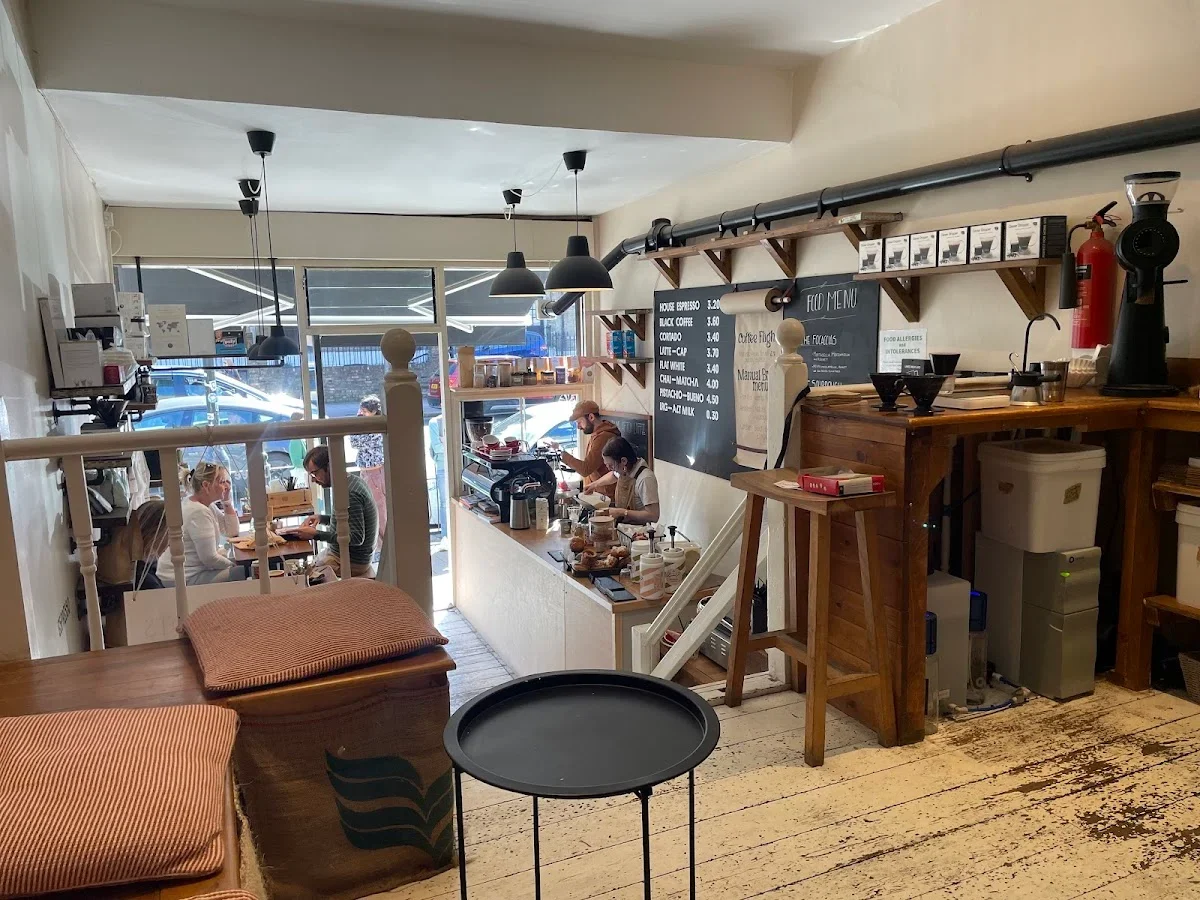
Mauro Laruffa, the founder of Specialty Cafetiere, a specialty coffee roaster and single-site operator in London’s trendy Hackney neighbourhood, highlights the mounting pressures UK independent coffee shops face.
Despite footfall increasing, rising operational costs, and reduced average spend are squeezing margins at the popular venue. “The last six months have been pretty tough. Footfall is good; in fact, we have more customers and higher sales compared to last year. However, with rising costs and lower spend per transaction, we’re making less money,” Laruffa says.
Laruffa uses POS data to track transactions and gain a clearer picture of the trading environment. Customers are still coming in, but they’re opting for value instead of indulgence and increasingly skipping food items. “Previously, customers were ordering a coffee with a pastry or a sandwich, but they’re increasingly just getting coffee,” he says.
Customers aren’t just sacrificing their daily pastry; they’re also foregoing higher-priced beverages, such as lattes, and opting instead for less costly espressos.
“It’s not because there are more espresso drinkers, it’s because espresso is the cheapest coffee on the menu,” Laruffa says.
Wholesale change
Cornwall-based Origin Coffee is one of Europe’s leading specialty coffee roasters. It supplies high-profile venues, such as Rosslyn Coffee, The Hoxton hotel group, and fast-growing US chain, Blank Street, alongside operating eight of its own coffee shops.
The group’s founder and CEO, Tom Sobey, views rising coffee prices as broadly positive for coffee farmers but says the rapid pace of change has caught many businesses off guard.
“We all want coffee producers to be paid more. But from our side, it would have been easier to get to this point over a longer period rather than manage these sudden cost increases.”
“We’ve followed the market, and the sales have been amazing”
Tom Sobey, Founder & CEO, Origin Coffee
Wholesale partnerships are a vital part of Origin’s business, and navigating the compounding pressures within hospitality – rising coffee prices, inflation, and the cost of living – has been challenging.
“It’s so difficult for hospitality right now. Like everybody else, our costs are going up. Whether that’s National Insurance (NI) contributions, coffee or energy costs. All of the problems that our wholesale customers have, we have as well.
“We’re fortunate that we’ve always managed the business in a sustainable and profitable way, which means we can keep price increases to a minimum. It’s like a perfect storm with all the changes to NI, business rates, and coffee prices – everything is going up,” says Sobey.
Even scaled coffee chains like Esquires Coffee, which operates 70 stores in the UK, are feeling the pinch of additional costs. “The main pressures on the business are the cost of people, property, and goods – not least the significant increase in coffee prices. Labour is also difficult. On the one hand, you have high student populations in areas like Leicester, where one of our stores is situated between two universities. On the other hand, in less populated areas, we find staff retention is difficult,” says Esquires CEO, Aiden Keegan.
“That’s where we work on retaining staff. We have internal competitions, particularly around latte art and coffee production and things like that that allow us to retain staff a little bit better than the normal churn in the industry,” Keegan adds.

If the price is right
When it comes to navigating sudden price hikes and broader business pressures, Origin has taken a balanced approach, absorbing some costs while strategically raising prices for some products.
“We increased prices in our coffee shops, for wholesale and online, and we’re now just monitoring the situation. We’re probably only now really feeling the full force of the green coffee price increase, as we had existing contracts, stock and commitments.”
Yet, not all rising costs have been passed along. Sobey notes that Origin has made deliberate choices to absorb some of the financial strain, particularly to protect client relationships and product quality.
“We have to be profitable to pay decent prices to producers, good salaries, and to help achieve career goals. As a business, we’ve said this year that we may need to sacrifice our levels of profitability to fund this tricky period for everyone. Our budget for this year was 30% growth, which we’re going to achieve. However, our EBITDA is going to be a little bit lower than last year. We made a conscious decision to reduce our margin as opposed to reducing our quality”.
That trade-off reflects Origin’s long-held commitment to sustainable growth rather than chasing short-term profit.
“We’ve realised where our strengths lie, and we’ve doubled down”
Aiden Keegan, CEO, Esquires Coffee
“I started Origin 21 years ago, and it’s taken us a long time to get here. Our relationships with our customer base, whether wholesale, retail, or e-commerce, are based on slow, steady, sustainable and profitable growth. We don’t work with supermarkets, so margin isn’t really an issue for us, and we took the decision to sacrifice profit over quality.”
Similarly, for Laruffa, the decision to limit price increases has come at a cost, one his business has chosen to absorb in order to maintain its connection with the community it’s taken years to build.
“We haven’t yet increased the prices in the coffee shop, so our menu is the same as last year. I believe in the community that we’ve built and don’t want to let our customers down, so we try to absorb as much of it as we can. However, we have slightly increased the cost of our wholesale coffee because we know that £0.50 or £1.00 on 1kg of coffee won’t have a significant impact on wholesale customers, while 30p-40p on a daily coffee will definitely impact our café regulars.”
Still, some changes have been unavoidable. For Laruffa, this has meant making strategic substitutions like swapping out well-known, premium brands for more affordable alternatives that still meet his quality standards.
“We try to find alternative products and different brands to save on costs. We recently switched from Oatly to Happy Happy Oat because it’s much cheaper and we haven’t seen a dip in quality.”
What’s more, Laruffa sees investment as key to growth and long-term resilience. Rather than cutting corners, he’s doubling down on efficiency and product consistency through upgraded technology.
“We’ve tried to improve our equipment to achieve a better workflow. For example, we’ve switched to a larger grinder, and we’ve installed a reverse osmosis water system that gives us higher-quality water. We’re also constantly trying new drinks and recipes for our menu.”
When it comes to menu innovation, Origin has also made significant leaps this summer with the launch of a new seasonal drinks offering. By observing market trends and consumer behaviours, the team has identified fresh ways to boost sales and diversify revenue streams, an approach that’s been a proven hit among customers and is already shifting the bottom line.
“All of the research we’ve done shows that cold coffee is sticking around. So, this year we created a summer drinks menu, which includes matcha coconut water with matcha foam, cold brew and a frozen cherry drink. More people are drinking matcha, which sits nicely alongside coffee. We’ve followed the market, and the sales have been amazing.”

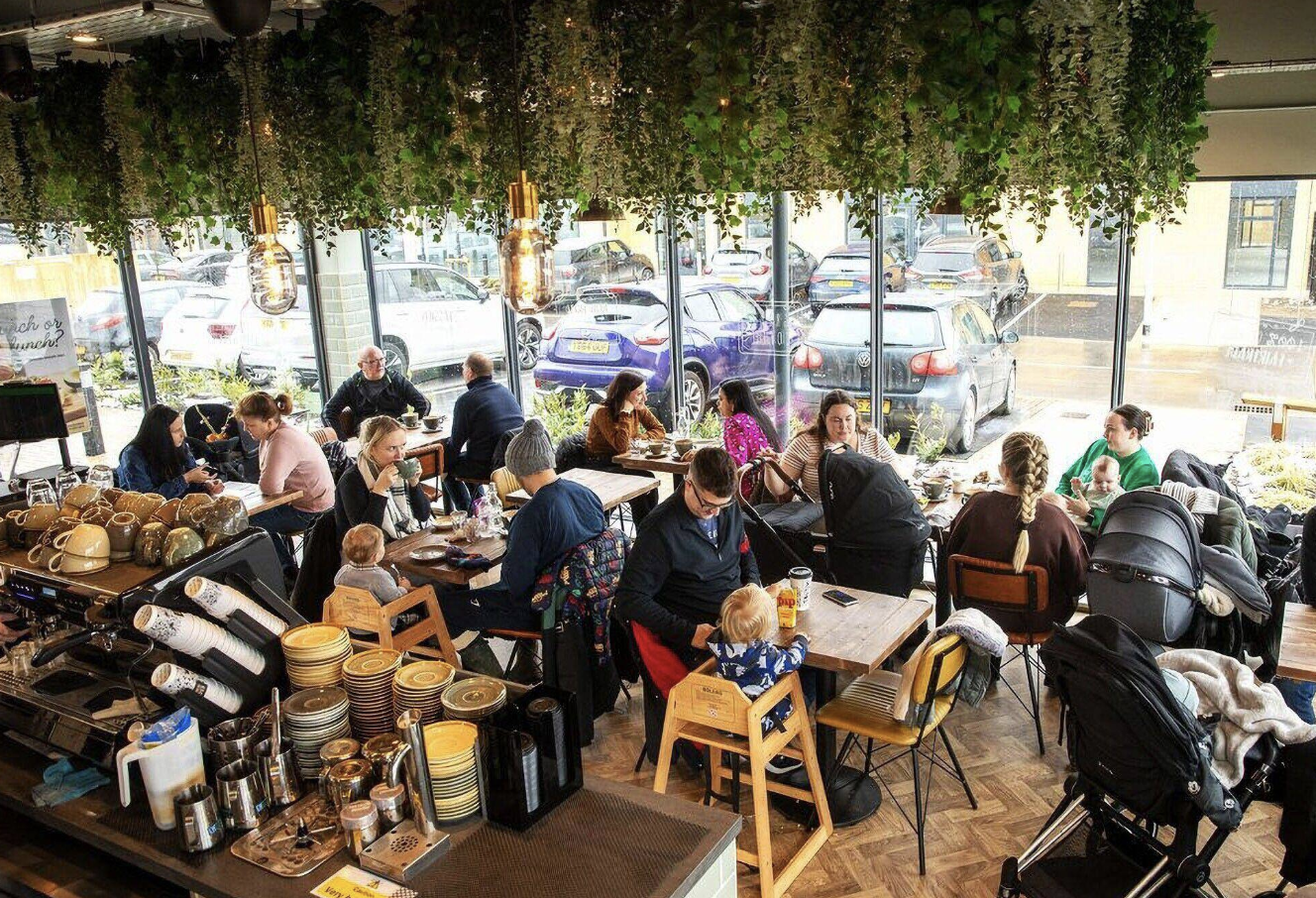
For Esquires Coffee, navigating current economic headwinds has seen the business cater to working patterns that emerged post-Covid. By opening cafés in and around new residential developments, the business is adapting to where people now spend their time, especially those working remotely for several days a week.
“I believe in the comminity that we’ve built and don’t want to let our customers down”
Mauro Laruffa, Founder, Specialty Cafetiere
This strategy has enabled Esquires to tap into a growing demand for ‘third places’ between homes and offices, while sidestepping some of the challenges facing higher-cost town centre sites.
Keegan notes that developers are often more flexible when it comes to commercial tenants, as the bulk of their revenues come from residential rents rather than commercial units. “We can get good deals, which means we can get franchisees on a good foundation of lower upfront costs,” he says.
An additional consequence of Covid-related work patterns is that in-store dwell time has increased, which gave Esquires the opportunity to launch premium breakfast, brunch and lunch menus.
“I certainly see there is a huge desire for people to get back out after Covid, and we have benefited from that. Increased dwell time has also fuelled our development of fresh food menus. We’ve realised where our strengths lie and we’ve doubled down,” he says.
Identifying demand
As rising costs across the coffee supply push high street beverage prices even higher, coffee’s status as an affordable luxury is being challenged as never before. Subsequently, many consumers are making less frequent coffee shop visits or adapting their daily coffee ritual with smaller beverage sizes and fewer menu add-ons to keep their spending low.
Nevertheless, demand for coffee and premium hospitality experiences in the UK remains strong, with consumers valuing the community, convenience and experience that coffee shops deliver.
It is clear that UK operators are under sustained pressure to demonstrate value-for-money. In a challenging market, they have plenty to offer, so long as they keep an ear to the ground and focus on meeting evolving customer demand.