Why Blank Street is the coffee chain everyone is talking about
From humble beginnings as a New York coffee truck to big horizons as a transatlantic force to be reckoned with, Blank Street has quickly gained a cult following for its innovative beverages, speed of service and competitive pricing. Deniz Karaman got the low-down on this trend-setting market disruptor
Five years ago, Blank Street was just a van on a Brooklyn corner. Today, it’s one of London’s fastest-growing coffee brands. At a time of rising prices and artisanal coffee trends, co-founders Issam Freiha and Vinay Menda saw an opportunity: to offer high-quality coffee at a more affordable price than local specialty cafes.
By operating out of vans, the duo sidestepped the high rental costs of traditional brick-and-mortar stores, while investments in automated coffee machines allowed them to keep overheads low and staffing needs minimal. This lean approach has enabled Blank Street to attract an impressive $140m in investment to-date, propelling the company toward rapid success.
Since launching in New York in 2020, Blank Street has expanded into Boston and Washington DC, boasting 45 stores across the three US states. In the UK, Blank Street has made its mark on British high streets with stores opening across the UK in cities like Manchester, Edinburgh and Birmingham.
At the time of writing, Blank Street operates 35 stores in London – rivalling Black Sheep’s 54 locations and outpacing up-and-coming specialty outfits like WatchHouse (19) and Redemption Roasters (15) by a comfortable margin. It’s an impressive leap to have made in the short time frame of just a few years.
So, what’s behind the appeal? According to the company, it’s about pairing thoughtful products with an experience designed for modern habits. “We build the things we’re genuinely excited about,” says Antonia Schmidt, Chief of Staff at Blank Street.
“Our core customers are mostly between 18 and 34, and matcha has really taken off with that group. It feels lighter than coffee, with steady energy and no crash. There’s a real curiosity around it right now. It’s an amazing culinary canvas for flavour. There’s so much room to be creative with it.”
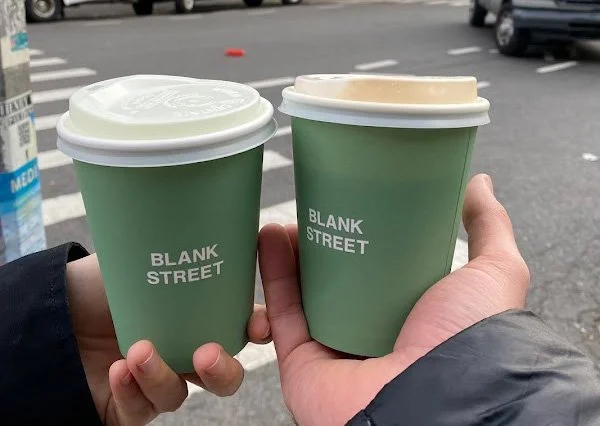
Indeed, matcha sales have boomed globally, with the UK being a strong contributor to its global rise. Blank Street has helped fuel this demand on British high streets, leaning into the aesthetic appeal of the vibrant green drink. Outside its shops, you’ll find colourful matcha-clad a-boards advertising the latest matcha concoction.
Instagram amplifies similar content, with the latest posts featuring a salted pistachio matcha ice cream and a newly launched Persian Pistachio Matcha drink. By applying their creator-first, product-focused ethos to an emerging trend, the brand has successfully tapped into both the growing interest in matcha and consumers’ appetite for novelty and indulgence in everyday treats.
While matcha has fuelled much of Blank Street’s momentum, coffee has always been the brand’s bread and butter. The company has leaned into bold, playful flavours – similar to its matcha strategy, which has resonated with younger consumers looking for novelty and Instagram-worthy moments. Drinks like its Strawberry Shortcake Latte reflect that ethos: “playful, nostalgic, and still elevated,” as Schmidt puts it. By keeping product “front and centre” and pairing specialty coffee with unexpected twists, Blank Street has carved out cultural relevance with younger demographics. “We’re obsessed with flavour,” she adds. “We approach it at both a culinary and mixology level, aiming to make every drink not just good, but unforgettable – to push boundaries, surprise people, and add a spark to the everyday.”
But Blank Street insists its success isn’t just about what’s in the cup. The company highlights its baristas and field teams as central to building brand affinity. “Great product and great service – it sounds simple, but when you do both at a really high level, it resonates,” she says. “At the heart of it, the team is deeply passionate. We care so much about what we’re creating, and that shows up in everything from the drinks we craft to the way we serve our customers… Just as important is the experience in our shops. Our baristas, shift leads, and field teams are incredible. They’re the ones bringing the brand to life every day, and the relationships they build with customers are everything.”
This combination of dessert-style recipes, efficient operations and warm hospitality has led some observers to dub Blank Street the ‘modern-day Starbucks’, a comparison the company takes as a compliment – though it claims to focus less on competitors and more on creative independence. “It’s an honour. Starbucks is one of the most influential players in our space, and you have to respect what they’ve built. Generally, we don’t spend much time looking sideways. Instead, we try to build in a bit of a vacuum, focused on what we think is exciting, delicious, and worth sharing. That creative independence is what’s shaped both our products and our brand.”
Notably, the brand has evolved significantly since its early days selling coffee from a van. While efficiency and mobile units defined its beginnings, Blank Street has shifted toward larger stores with a stronger focus on design and hospitality. “The biggest shift for us has been evolving away from small-format, speed-driven locations,” Schmidt explains. “We started out aiming to deliver a high-quality product quickly and seamlessly, but over time, what has truly defined us is flavour innovation and hospitality.
“That mission has led us to rethink more than just our drinks. We’ve moved beyond our early footprint and are now focused on larger store formats that are much smoother for both the customer and barista experience.”
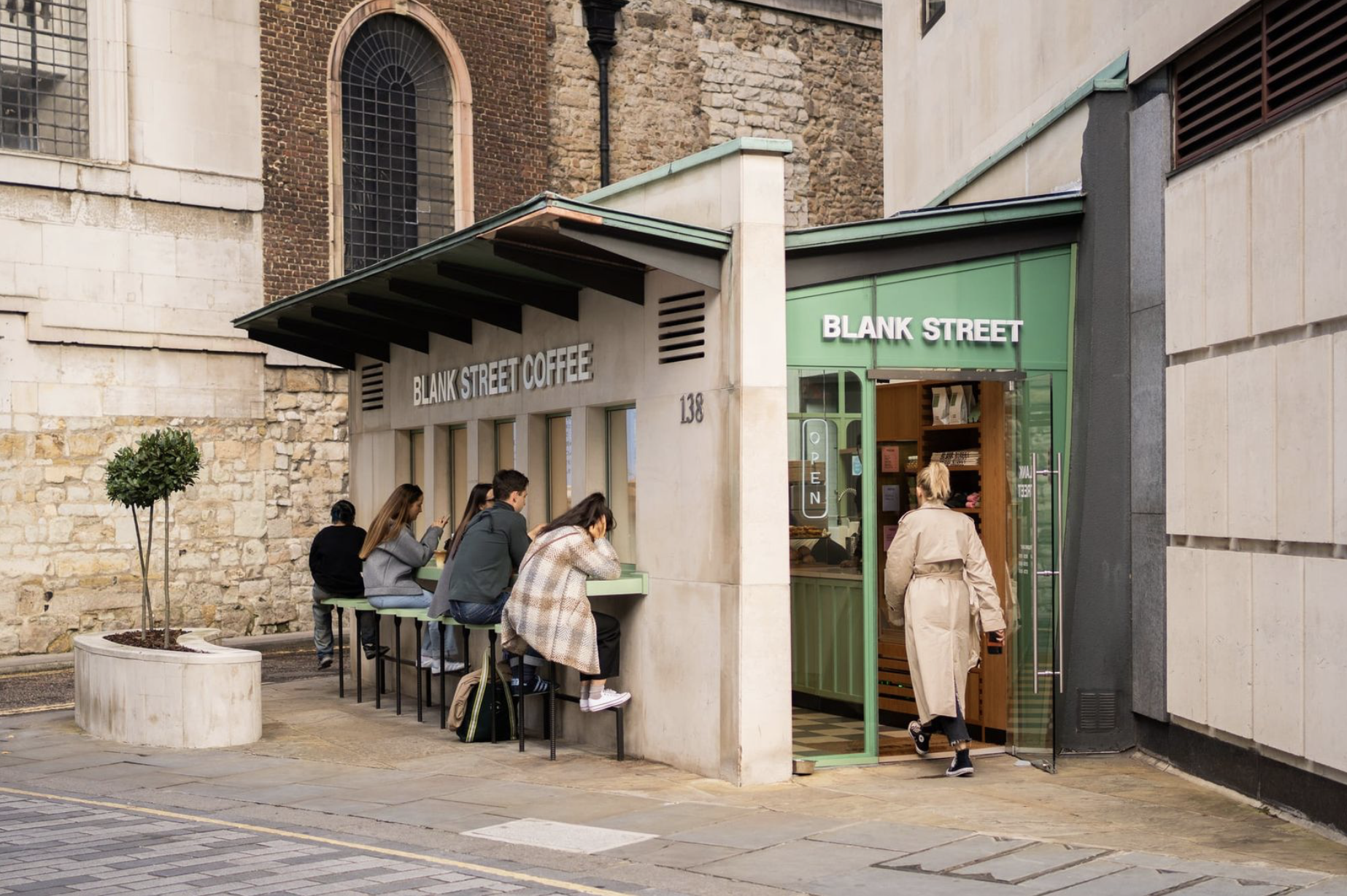
That attention to detail and focus on creativity have helped Blank Street carve out a distinctive niche in a crowded UK coffee market. It’s more affordable than many premium chains, more design-focused and social media–savvy than legacy players. It also harbours a young, start-up spirit, and is nimbler than the big multinationals. Whether this formula can sustain its rapid pace of growth remains to be seen, but the company is clear about its ambitions.
Blank Street plans to remodel existing locations and double down on its signature mix of bold flavour innovation and hospitality. Schmidt tells World Coffee Portal, “Looking ahead, one of our biggest priorities is raising the bar across all of our stores. We know what great looks like, and now it’s about making sure every location reflects that standard. Over the next year, you’ll see many stores get remodelled, an increasing focus on hospitality, and continued innovation on what we do best: raising the bar on quality and innovation with our products. The goal is simple: to make every visit feel unmistakably like us: thoughtful, warm, and full of little moments that surprise and delight.”
For now, the buzz shows no sign of slowing. From a single van in Brooklyn to dozens of sleek, pastel-hued storefronts across London, Blank Street’s story reflects a broader shift in how young consumers want their caffeine: affordable, experiential, and just a little bit unexpected.